Save OVER 30% on all ebooks AND 40% ON EBOOK BUNDLE!
Peer Support for Men: Why It Sometimes Works Better Than Therapy
With HSV, some of the most transformative conversations are not in clinics but with other men who have lived it. Peer support offers practical, relatable guidance that complements therapy, especially around disclosure and dating.
COMMUNITY & SUPPORT
Jordan
8/24/20266 min read
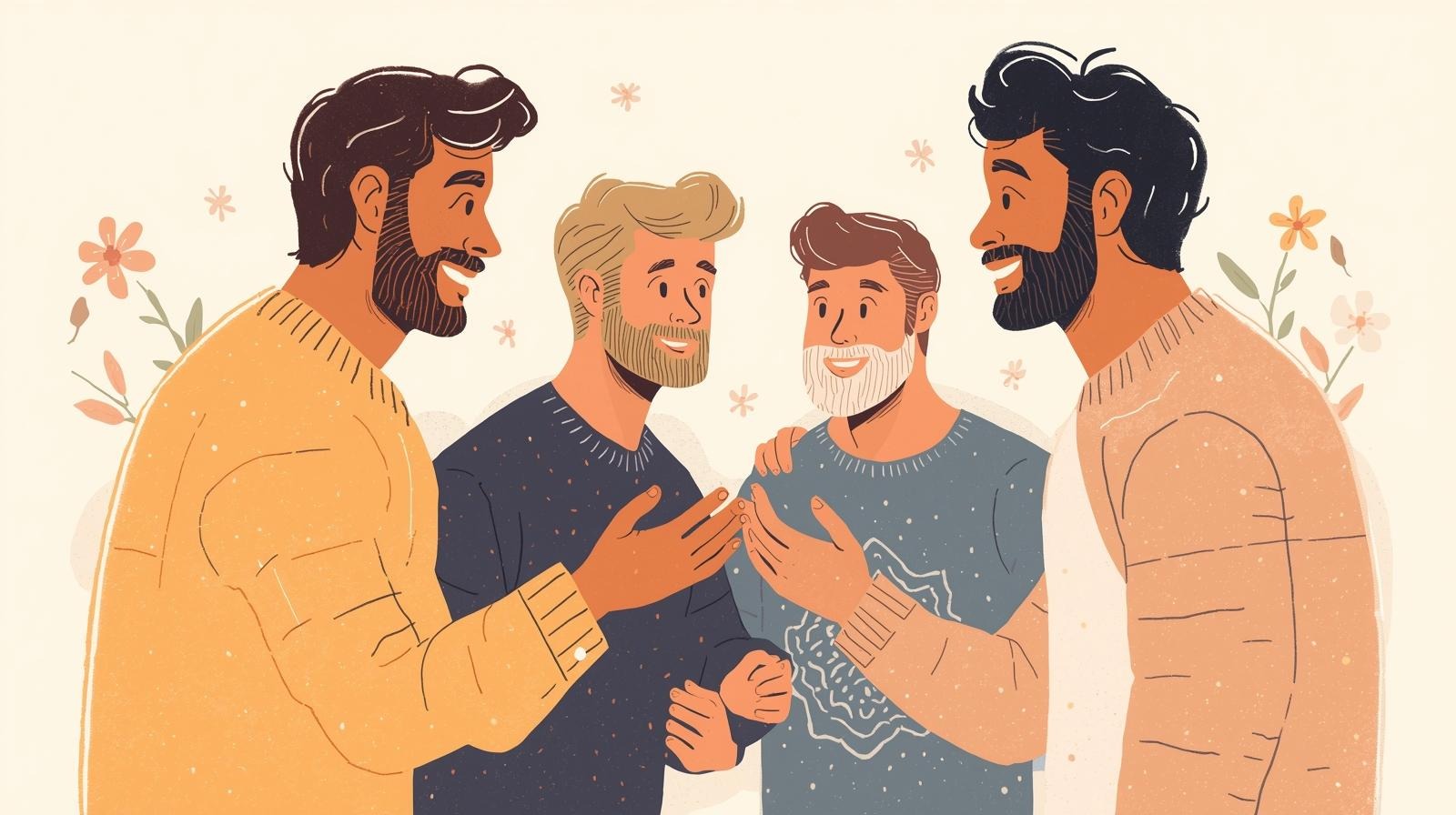
Your Peers Get It (In Ways Therapists Don’t)
Many men are wary of therapy: it can feel clinical, expensive, or mismatched with how you were taught to “handle your own problems.” At the same time, trying to carry HSV alone can magnify shame, anxiety, and isolation. Peer support offers a middle path: real talk with people who actually get the diagnosis, the dating anxiety, and the identity questions, without the formalities of a consulting room.
Therapists can offer expertise; peers offer recognition. You need both—but if you’re therapy‑resistant, peers are often the doorway in.
_________________________________________________________________________________________________________________
The Research on Peer Support
Studies across chronic illnesses show that structured peer support is associated with better quality of life, more self‑efficacy, improved coping, and lower internalised stigma. In men specifically, self‑help and peer‑based groups (especially when combined with education or activity) often outperform more traditional support formats in acceptability and impact.
For HSV, we don’t yet have huge randomised trials of support groups, but smaller studies and clinical experience consistently note that:
Stigma and shame reduce when people connect with others who share the diagnosis.
Anxiety and depression symptoms tend to improve when isolation breaks.
People become more likely to disclose safely and seek medical care when they’ve seen others do it.
Because stress is a well‑known trigger for outbreaks, anything that lowers chronic stress load—like feeling less alone, more understood, and more supported—can indirectly reduce outbreak frequency for some men.
Qualitative research (interviews and focus groups) adds the human detail: men describe feeling less “contaminated,” more hopeful about dating, and more accepting of themselves after engaging with HSV‑focused groups or communities.
_________________________________________________________________________________________________________________
Why Peer Support Works
Reason 1: Shared Experience
There’s a unique relief in saying “I have herpes” and hearing “same” without flinch or drama. You don’t have to explain the basics; the people listening already know what prodrome feels like, how disclosure anxiety hits, how weird it is to see your own body differently.
That shared experience delivers the kind of validation no textbook can: “You’re not the only one. You’re not the worst case. You’re just one of us.”
Reason 2: No Power Imbalance
In peer spaces, you’re not the “patient” and someone else the “expert.” You’re equals. Nobody is there to diagnose your personality or pathologise your reactions. Everyone is bringing their own mess, their own progress, their own wins and losses.
Mutual vulnerability levels the field. That’s often easier for men who were taught to distrust authority but are willing to listen to brothers on the same battlefield.
Reason 3: Practical Wisdom
Peers tell you what actually happens in bedrooms, on first dates, at STI clinics and in marriages:
Which disclosure scripts landed well and which crashed.
How partners have actually reacted in 2024–2026, not in theoretical models.
How to handle specific app prompts, rejection texts, or anxious partners.
Therapy may give you frameworks; peers give you copy‑paste sentences that have already been field‑tested.
Reason 4: Hope Through Example
Seeing men ahead of you—dating, married, co‑parenting, leading teams at work, mentoring others—shifts HSV from catastrophe to context. You don’t have to believe it gets better; you can watch it.
That living evidence is especially powerful when you’re newly diagnosed or have just had a rough rejection.
Reason 5: Belonging
Stigma isolates. Peer support rebuilds belonging:
HSV becomes “something we share” instead of “this shameful thing only I have.”
You get a community identity that’s about resilience and honesty, not just diagnosis.
Belonging is not a fluffy extra; it’s a core determinant of mental health.
_________________________________________________________________________________________________________________
Types of Peer Support
You don’t have to start with a circle of guys in a church basement.
Online forums: Reddit (e.g. r/HSVpositive, r/HerpesQuestions) and platforms like PositiveSingles or HSV‑specific Discords allow anonymous questions, story‑sharing, and practical advice.
In‑person support groups: Herpes Viruses Association (UK), ASHA, SPFPP, and local clinics host groups where you can meet people face‑to‑face.
One‑on‑one mentorship: Some communities and podcasts (e.g. Something Positive for Positive People) informally match newer and more experienced members.
Activity‑based groups: Hiking, fitness, or hobby meetups for people with HSV blend normal life with subtle shared understanding.
Closed/private communities: Small, vetted WhatsApp/Discord/Zoom groups with clear rules and higher trust.
Different seasons of your journey may call for different formats.
_________________________________________________________________________________________________________________
Peer Support vs Professional Therapy (Not Either/Or)
Therapy and peer support do different jobs.
Therapy offers:
Clinical expertise in trauma, depression, anxiety, attachment, and sexuality.
Structured tools (CBT, EMDR, schema work, etc.).
Clear ethical and professional boundaries.
Peer support offers:
Normalised, everyday conversation about living with HSV.
Lived strategies for dating, disclosure, and relationships.
Community and ongoing informal contact.
Low or no cost access.
The optimal combination for many men is therapy for deep work and old wounds, plus peer support for daily navigation, accountability, and a sense of “my people.”
If you’re not ready for therapy, peer spaces can soften the ground: they show you that talking about this stuff doesn’t break you—and sometimes that experience is what finally makes therapy feel safe enough to try.
_________________________________________________________________________________________________________________
How to Find Your Peer Support
Start where the barrier is lowest.
Online:
Read first, then slowly participate in Reddit and Discord communities listed in vetted resource directories like the Modern HSV Playbook Community Resources page.
Explore platforms like PositiveSingles not just for dating, but for blogs and comment sections about lived experience.
Local:
Google “herpes support group your city/country” and check reputable sites (HVA, ASHA, SPFPP, clinic pages).
Ask your sexual health clinic or GP if they know of groups—they often have contact lists or leaflets.
If nothing exists, consider starting a small group yourself once you’re ready (see your Week 32/“Creating In‑Person HSV Support” content).
Mentorship:
In existing communities, look for men whose mindset you respect. Message: “I’m new to this and really resonated with what you shared—would you be open to a short call or occasional check‑ins?”
Be clear about boundaries and reciprocity: you’re not seeking a therapist, but a peer who’s a bit further along.
_________________________________________________________________________________________________________________
Getting the Most From Peer Support
Peer groups only work if you participate.
Show up consistently: lurk if you must at first, but aim to engage regularly so you build relationships, not just consume posts.
Share authentically: you don’t need to dump everything on day one, but being real about your feelings, screw‑ups, and wins is what makes these spaces powerful.
Listen generously: treat others’ stories with respect; don’t compete in “who has it worst.”
Give back: once you’re a little more stable, reply to newer men. Helping others reinforces your own progress.
Set healthy boundaries: you’re not obligated to answer DMs at midnight or take on everyone’s crisis. It’s okay to protect your own energy.
Simple community etiquette—confidentiality, respect, no shaming or pressuring—creates safety for everyone.
Red Flags in Peer Groups
Not all spaces are healthy. Watch for:
Enabling vs supporting: endless venting with no movement, advice that undermines safer sex or disclosure in ways that put others at risk.
Gossip vs connection: people sharing others’ stories without consent, mocking exes or partners.
Toxicity: misogyny, homophobia, racism, or aggressive shaming; pressure to see yourself as a victim forever.
When to exit: if you leave feeling worse, judged, or pressured most times, or if your own boundaries aren’t respected, it’s okay to mute, leave, and find a better space.
A good group leaves you feeling more grounded, not more poisoned.
_________________________________________________________________________________________________________________
From Receiving to Giving Support
One of the most healing transitions you can make is from “the guy who needs help” to “the guy who can offer some.”
That doesn’t mean being a guru. It could look like:
Answering basic questions from someone newly diagnosed.
Sharing what you wish you’d known in month one.
Co‑hosting a call or helping moderate a group.
Being open about both your setbacks and your progress.
Research shows peer supporters themselves often experience improved self‑efficacy, disease management, and self‑worth. Teaching is one of the ways we integrate what we’ve learned.
_________________________________________________________________________________________________________________
Measuring the Impact
You’ll know peer support is working when:
You think about HSV less often and with less panic.
Disclosures feel doable (still uncomfortable, but survivable).
You feel more connected, less “alien.”
You take better care of your health because you’ve seen others model it.
You can even track your mood, anxiety, and outbreaks over time as you engage with community—many men notice visible improvements over a few months.
Peer support is not a consolation prize for men who “can’t handle therapy.” It’s a proven, powerful way to reduce shame, improve coping, and build a life that isn’t defined by HSV—especially when you pair it with good medical care and, when needed, professional counselling. You don’t have to do this alone, and you don’t have to start with a stranger in a consulting room. You can start with other men who’ve already lived what you’re living now.
MODERN HSV PLAYBOOK
Evidence-based guides for men living with HSV. Research-backed, radically honest, and written by someone who has been there.
THE SERIES
© 2026 Modern HSV Playbook. All rights reserved.
SITE
Content for informational purposes only. Not a substitute for professional medical advice.